
Full Mouth Restoration

Restore your teeth and reclaim your smile

Detroit Dentist in Bingham Farms offers comprehensive full mouth restoration — a coordinated plan combining implants, crowns, bridges, veneers, and gum therapy to rebuild a healthy, functional, beautiful smile. Dr. Sajid Baqai uses CBCT 3D imaging and digital smile design to map out a phased treatment plan that addresses every issue, from bite problems to missing teeth to worn enamel. Patients from Bingham Farms, Utica, Sterling Heights, and across Macomb County choose Detroit Dentist for complex rehabilitation done right the first time. Schedule a full mouth consultation or call (313) 356-7577.

What is a full mouth restoration?

What is a full mouth restoration?

Full mouth restoration is a comprehensive dental treatment that involves restoring or replacing all of the teeth in the upper and lower jaws. This treatment is designed for individuals who have multiple dental problems, including missing, damaged, or decayed teeth, gum disease, bite problems, and other oral health issues. Full mouth restoration is a customized treatment plan that may involve a combination of dental procedures, such as dental implants, crowns, bridges, veneers, gum treatments, and orthodontics. The goal of full mouth restoration is to restore the health, function, and appearance of the entire mouth, improving the patient’s oral health and quality of life. If you have multiple dental issues that are impacting your smile, Full Mouth Restoration may be the solution you’ve been looking for.
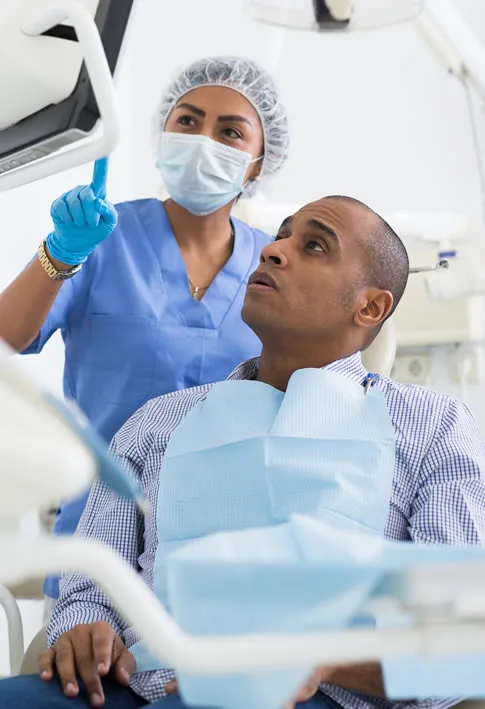
What procedures are part of a full mouth restoration?

What procedures are part of a full mouth restoration?

A full mouth restoration might include any of the following procedures:

  • Dental implants: A surgical procedure to replace missing teeth with artificial teeth that are anchored to the jawbone.
  • Crowns and bridges: Restorative dental procedures that can be used to repair damaged or missing teeth.
  • Veneers: A cosmetic dental procedure that involves placing thin shells of porcelain or composite resin on the front surface of the teeth to improve their appearance.
  • Orthodontics: A branch of dentistry that involves the use of braces, clear aligners, or other appliances to straighten teeth and correct bite problems.
  • Periodontal (gum) therapy: Treatment of gum disease, which can involve scaling and root planing, antibiotics, and other procedures.
  • Endodontic (root canal) therapy: A procedure to remove infected or damaged tissue from the inner part of a tooth and replace it with a filling.
  • Dental fillings: A procedure to remove decayed material from a tooth and fill the cavity with a restorative material such as composite resin or amalgam.
  • Dental bonding: A cosmetic dental procedure that uses a tooth-colored resin to repair chipped, cracked, or discolored teeth.
  • Tooth extractions: Removal of a tooth that is damaged, decayed, or causing other dental problems.
  • TMJ (temporomandibular joint) therapy: Treatment for disorders of the jaw joint, which can involve exercises, medication, or in severe cases, surgery.
  • Bone grafting: A surgical procedure to replace missing bone in the jaw to provide support for dental implants or other restorations.
  • Sinus lifts: A surgical procedure to add bone to the upper jaw in order to support dental implants.
  • Gum grafting: A surgical procedure to replace lost or damaged gum tissue.
  • Teeth whitening: A cosmetic dental procedure that uses bleaching agents to lighten the color of the teeth.

More Questions about Full Mouth Restorations?
Contact our office today to schedule a consultation. We can go over all your dental options and customize a dental plan just for you. We look forward to seeing you.

Are you a candidate for a full mouth restoration?

Patients who suffer from multiple dental issues such as chipped or missing teeth, cracked or broken crowns, severe decay, enamel breakdown, and stains may benefit from a full mouth restoration. This comprehensive treatment approach aims to restore the function, health, and aesthetic of the entire mouth.

Dental issues such as missing or damaged teeth can make it difficult to chew, speak, and even smile with confidence. A full mouth restoration can address these issues and restore the ability to perform basic oral functions with ease. It can also enhance the appearance of your teeth and boost your self-esteem.

Moreover, some patients choose to undergo a full mouth restoration to correct crooked or misaligned teeth without undergoing orthodontic treatment. This is especially beneficial for those who may not have the time or patience for traditional braces or aligners.

If you’re experiencing dental pain or discomfort, difficulty eating or speaking, or if you’re unhappy with the appearance of your teeth, schedule a consult with our Bingham Farms dentist to determine if a full mouth restoration is right for you. We will evaluate your oral health and create a personalized treatment plan that addresses your individual needs and goals.
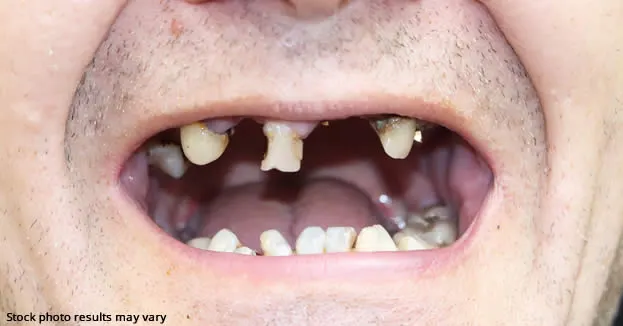
Before full mouth restoration — damaged and missing teeth
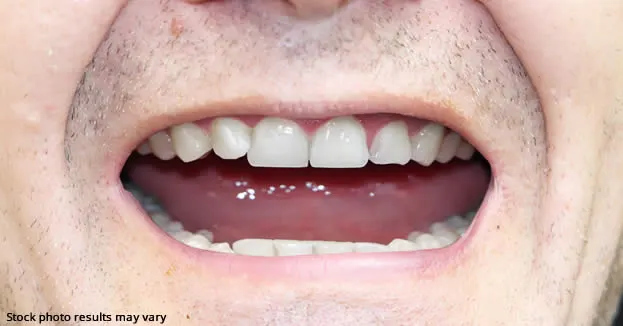
After full mouth restoration — restored healthy smile
Our Clinical Approach

Full mouth restoration is among the most rewarding work in dentistry. Patients often arrive unable to eat comfortably, having hidden their smile for years — and leave with a functional, healthy, beautiful result that changes how they live day to day.

The key to a successful full mouth case is careful sequencing. Gum health is addressed first, then structural problems, then aesthetics. Every step builds on the last, and CBCT planning maps every implant, crown, and bite adjustment before the first appointment.

Reviewed by Dr. Sajid Baqai · Detroit Dentist, Bingham Farms, MI

Transcript
hi everyone my name is Whitney and I am a dental hygienist if you're new here welcome if you've been here before welcome back let's talk about what to do and how to replace a missing tooth and before we jump in let me quickly remind you about my website teeth toalk girl.com if you're ever looking for a specific Dental topic I have a search bar where you can easily find what you're looking for and also my Instagram @ teeth talkgirl often times if you're missing a tooth or just had a tooth pulled you had a tooth extraction you will have four options on what to do next and I'm about to go over these four options from the least ideal situation to the most ideal situation which is also least expensive to most expensive one if you have a missing tooth that is not bothering your cosmetic appearance maybe it's super far back there and you can't even tell it's missing or if you don't even notice it's gone because you don't have an opposing tooth to chew with meaning you lost a bottom tooth and your top tooth opposing it is also missing then unless you're going to replace both sometimes not really functional anyway so option one is to do nothing at all leave the Gap leave it alone but more often than not usually this is not the best option because you will have bone loss in this area over time and the opposing teeth if there are any can drop down also Moler teeth are functional teeth they are the ones that help you chew your food so always always always keep function and mind but know that it is always an option to do nothing at all two get a partial denture or a flipper again this does not keep the bone level where it should be so you can get bone loss over time although it will improve your cosmetic appearance and it can help you Cho too if it's a true partial denture but sometimes if it's just a flipper it's for appearance only either way you need to remove it every night when you sleep but during the day partials and flippers will fill the Gap three get a bridge this used to be the best option to replace a missing tooth before implants came along but now it's not always the best option because you have to Crown both adjacent teeth to the missing tooth so if something goes wrong in the future with one of those two teeth holding the middle tooth in the bridge you now lose the whole Bridge all three crowns plus if the tooth teeth are healthy you are putting crowns on healthy teeth that otherwise didn't need to be disturbed with the drilling in the crowns and again you can lose bone in that area over time four the best option is to get a dental implant if you can it is a standalone crown that does not Place strain on any other teeth it does not disturb the surrounding teeth and it helps keep the bone level an implant is a screw that goes directly into your bone and after it heals you get a crown that screws onto it pro tip the screw itself is called the implant the tooth portion you can see is it's called the implant crown and the abutment is what holds the two together just some dental vocabulary for you so like I said as of today implants are considered the best option to replace a missing tooth but don't get me wrong there are situations when your bone isn't high enough for the implant to be placed in this case sometimes you can get a bone graph where the dentist adds Cav bone to your bone and sutures it up and then you're all good and you're all ready for a future implant however in select cases whether it's due to other situations with your bone due to health conditions or history of taking bif phosphinates in select cases it is possible that you are not eligible for an implant how to find out if you're eligible always one make sure you provide a comprehensive updated health history for your dentist to review and two the dentist or dental surgeon will always have to take a CT scan on you before placing an implant so they can have a three-dimensional image of your jaw after a consultation with those two things your health history and your CT you will then be able to find out if you're eligible for an implant if for some reason you're not eligible it's okay your dentist will determine the next best treatment option available for your individual mouth whether it's a bridge or a partial or leaving it alone lastly if you have not yet lost your tooth in question and there is an option to save it with a root canal I'm all for trying to save your actual tooth first before you get an extraction it's always best to have your own teeth if you can however if the tooth in question is not salvageable and it needs to be removed your dentist will help guide you in the right direction for decision- making and treatment planning I hope this video helped you please like And subscribe if it did and until next time Peace Love and te [Music]

Planning full mouth restoration

A dental professional will evaluate and plan out a full mouth restoration by performing a comprehensive examination of the teeth, gums, and jawbone. This process includes several steps:

  • Comprehensive Dental Exam: The first step in planning a full mouth restoration is a comprehensive dental exam, which includes taking x-rays, photographs, and impressions of the teeth and gums. This allows the dentist to evaluate the overall health of the mouth and identify any underlying issues that need to be addressed.
  • Oral Health Evaluation: The dentist will evaluate the overall oral health of the patient, which includes examining the teeth and gums for signs of decay, damage, or infection. They will also check for signs of periodontal disease, which can affect the health of the gums and bone supporting the teeth.
  • Bite Analysis: The dentist will evaluate the patient’s bite and jaw function to determine if there are any issues with alignment or temporomandibular joint (TMJ) disorder.
  • Treatment Planning: Based on the findings of the examination, the dentist will create a personalized treatment plan that addresses the patient’s individual needs and goals. This may involve restorative procedures such as fillings, porcelain crowns, or bridges, orthodontic treatment, periodontal treatment, and cosmetic dentistry procedures such as teeth whitening or veneers.
  • Reviewing Treatment Options: The dentist will review the treatment plan with the patient, explaining the various options available and their benefits and risks. They will also discuss the expected timeline, cost, and any possible complications or side effects.
  • Follow-Up: Once the treatment plan has been agreed upon, the dentist will schedule the necessary appointments and follow-up visits to ensure the success of the full mouth restoration and maintain the health and longevity of the restorations.
Key Benefits

Why Choose This Treatment

Complete Smile Transformation

Full mouth restoration addresses every tooth simultaneously, producing a comprehensive result that individual procedures cannot achieve on their own.

Restores Full Chewing Function

Patients who have been unable to chew normally due to missing or damaged teeth regain the ability to eat a full diet without pain or limitation.

Personalized Multi-Step Plan

Every full mouth restoration is a custom plan designed around your anatomy, health history, and goals — not a one-size-fits-all protocol.

Combines Best Available Treatments

your dentist draws from the full range of modern dental procedures — implants, crowns, veneers, gum therapy — to create the optimal plan for each patient.

Life-Changing Results

Patients consistently report that full mouth restoration profoundly improves their confidence, social life, and overall well-being — not just their dental health.

Not sure where to start? A comprehensive consultation with your dentist is the first step. He will evaluate your current dental situation, answer all your questions, and outline a clear, realistic treatment path toward your healthiest, most confident smile.
Is This Right For You

Is Full Mouth Restoration Right for You?

Full Mouth Restoration is a good fit if you are:

  • Patients with multiple failing, missing, or severely worn teeth
  • Patients with significant bite problems or TMJ dysfunction
  • Patients who have avoided dental care for years and have compound issues
  • Patients committed to long-term treatment and maintenance

This may not be the right option if:

  • Patients unwilling to address underlying gum or bone disease first
  • Patients without the time or financial resources for phased treatment
  • Patients with unrealistic expectations or unwilling to follow the plan
Step By Step

What to Expect During Your Full Mouth Restoration Visit

Here is exactly what happens at your appointment at Detroit Dentist. Knowing each step makes the experience far less intimidating — and lets you relax knowing what comes next.

  1. 1. Comprehensive exam.Dr. Sajid Baqai performs a full exam including CBCT, digital photos, bite analysis, and a discussion of your goals. This is the longest appointment — 90 minutes or more.
  2. 2. Treatment plan review.A phased plan is created and presented to you — with timelines, costs, and visual previews. You approve each phase before work begins.
  3. 3. Phase 1: Foundation.Any active disease (gum disease, decay, infection) is treated first. Extractions are performed if necessary.
  4. 4. Phase 2: Structural rebuild.Implants, crowns, bridges, or dentures are built to restore function. Provisional teeth are worn during healing.
  5. 5. Phase 3: Aesthetics and finalize.Final restorations are placed. Veneers, whitening, and gum contouring complete the look. A long-term maintenance plan is set.
Common Concerns

Common Concerns About Full Mouth Restoration

These are the questions patients at Detroit Dentist ask most often before committing to treatment. Dr. Sajid Baqai addresses each one honestly at your consultation.

"It sounds overwhelming — and expensive"

Full mouth rehabilitation is phased over weeks or months, not all at once. Dr. Sajid Baqai builds a treatment plan with clear phases and costs, so you know exactly what's coming and when. Financing makes the investment manageable.

"I've put off dental work for years — am I beyond help?"

No. Dr. Sajid Baqai sees patients every week who thought their situation was hopeless. Modern dentistry — implants, veneers, crowns, grafting — can restore smiles that were unthinkable a decade ago.

"Will I be toothless during the process?"

No. Provisional (temporary) teeth are placed throughout treatment so you're never without a smile. You can eat, work, and socialize normally while healing.

What to Know

Risks and Considerations of Full Mouth Restoration

Every procedure has tradeoffs, and transparent conversation about them is part of informed consent. Dr. Sajid Baqai reviews these at your consultation and answers every question before treatment begins.

  • Each procedure has its own risks (implant failure, crown fracture, infection, bite adjustment)
  • Long treatment timelines require patient commitment
  • Provisional teeth may need adjustments along the way
  • Not all damaged teeth can be saved — some extractions may be needed
Watch & Learn

Patient Education Videos

Dental Veneers vs. Crowns: Which Is Better & What's the Difference
Transcript
hi everyone my name is whitney and i am a dental hygienist if you're new here welcome if you've been here before welcome back let's talk about the differences between dental veneers and dental crowns before we jump in if you ever have a question about a specific dental topic go to google type in your question and put teeth talk at the end and then you'll see an article or a video of me explaining the answer so crowns and veneers are two different things they are not the same although when you're smiling you won't be able to tell the difference so why would you want one over the other let's talk about the underlying differences between the two crowns aka tooth caps cover your entire tooth a crown and a cap are the same thing while veneers which are not crowns nor caps they only cover part of your tooth so deciding between crowns versus veneers on your front teeth for example will be a different decision and treatment plan for everyone one option is not a better option than the other unless your dentist feels otherwise about your individual situation let me explain further the biggest factor when deciding if you need crowns or you want veneers will depend on whether or not your tooth is healthy that's why i said if your dentist feels otherwise right if you're going in with only cosmetic purposes in mind great but your teeth still need to be checked beforehand to confirm you can do cosmetic purposes only meaning you don't have any signs of cavities or tooth decay crowns are meant to repair broken teeth decayed teeth etc while also complimenting their appearance so it's two in one with a crown so your tooth is still under there with a protective shell covering the entire surface all the way up to the gum line completely sealing it underneath so crowns are not only crafted to look like your natural teeth but they are also necessary for health-related purposes i do have a procedural video where i filmed a crown being placed with me voicing over explaining the steps if you're interested i'll link that video in the bottom bar below so again with crowns your tooth is typically reduced down to a smaller size before a crown or cap will fit over it there are several different options out there for a dental crown design most crowns on your front teeth will probably be full porcelain or zirconia a highly durable ceramic or they may even be carved from a solid block of ceramic if it's a same day design porcelain fused to metal or gold crowns are nowadays typically restricted to the back teeth so unless requested your dentist will usually not even offer those for front teeth so if you get a porcelain no metal crown only your dentist and dental hygienist will be able to tell if it's a crown versus a veneer because like i said from the outside they both look the same now a little more about veneers now veneers are completely elective and are often only for cosmetic purposes they only cover the front side of your teeth and slightly over the edges when you smile you see this perfect looking tooth but your natural tooth is totally behind it some people compare veneers to an artificial fingernail because of how it goes over the real thing but it changes the way everything looks a thin layer of your tooth is buffed away before the veneer is installed and the thing about veneers there are three different types there are porcelain veneers composite veneers and no prep veneers porcelain offers the best durability and aesthetic results making them the standard for most smile makeovers porcelain veneers are similar to dental crowns in the way they're designed since the material is hand crafted at a lab or designed with cad cam technology at your dental office composite or chair side veneers are similar to cosmetic bonding or a white tooth colored filling so with these the material is immediately shaped onto your tooth by your dentist chair side just like in the name it is then cured into place with a blue curing light a lesser known alternative to the porcelain and composite veneers is the no prep design they are lab made veneers that are crafted from a laminate material and bond directly on top of your unaltered tooth enamel so there is no drilling and they are completely reversible so if you want to remove them later on you can but there's lots of downsides to these such as not everyone qualifies for them not all dentists do them they often do not hide all discoloration or dark enamel stains because they are so thin and lastly they will not work if you have any misalignment concerns so in the long term traditional veneers whether they are porcelain or composite chair side those ones are often the more cost effective options the no prep is very specific and rare but still wanted to mention it as an option having said all of that let's talk about the advantages and disadvantages of all types of veneers as a whole versus all types of crowns as a whole advantages of veneers they address your entire smile zone at one time they make your smile look beautiful they do they can replace the need for whitening or braces in some cases and they are tailored to your individual preference disadvantages they can be super expensive they are usually non-reversible and need to be replaced throughout your life you need several of them at a time you generally can't just do one veneer usually they are not covered by insurance and lastly the budget veneers like the no prep often don't look as good as the porcelain however some dentists do a very good job with the composite veneers so another reason to really discuss your options with your dentist ask them for before and after photos to see their work that's a totally valid request advantages of crowns they are usually covered by your dental insurance they can be placed on just one or two teeth instead of several they fix teeth with cracks and cavities they enhance your tooth's appearance while also protecting the weak structure disadvantages of crowns they are more invasive to your tooth than a dental veneer they are typically only placed on one tooth at a time but not always if your dentist makes them an office that's amazing you can often get them all in one day they are generally used on an as needed basis again there's always exceptions and lastly they could have a visible metal base if they're porcelain fused to metal depending on the material used so always ask if they plan to do full ceramic non-metal crowns for your front teeth especially unless again you want a metal crown you do you so which one lasts longer veneers or crowns so some literature says it's about the same but i personally feel from what i've seen is that crowns can really stand the test of time if they are made of a durable material and you're not grinding your teeth and you're keeping them clean so generally speaking whether you have veneers or crowns to prolong the life of them you should wear a nightguard if you're a grinder and take care of your mouth properly floss around them every day brush properly doing these things can easily add years of life to them so this question which one will last longer is definitely absolutely a question to ask your dentist because it truly depends on a case-by-case situation which material they use etc and lastly which one is more expensive there are several different variables yet again always that will impact the total out-of-pocket cost for you but for a dental crown the average price with insurance is 600 to 950 per tooth and the average price with no insurance is 800 to 1500 per tooth please remember these are averages they can be way less expensive or way more expensive depending on the area where you live and the location of your dental office and for a dental veneer the average price with insurance none it's typically not covered so the average price with no insurance they're usually about 925 dollars to 2500 per tooth in all if you're still debating whether or not you need a crown versus wanting a veneer on your front teeth specifically my best advice is to schedule an appointment at your dentist's office and ask questions about what your dentist is planning to do with your teeth because like i said there are so many different options so many different materials different costs etc depending on the dental office and if you already did that you talked with your dentist and you're still confused you can always get a second opinion at another office i hope this video helped you please like and subscribe and turn on your notifications if it did find me on instagram at teethtalkgirl and until next time peace love auntie you
Common Questions

Frequently Asked Questions About Full Mouth Restoration

Yes, a full mouth restoration can involve cosmetic procedures such as veneers or bonding to improve the appearance of crooked or misaligned teeth.

Yes, a skilled and experienced dentist can create natural-looking restorations that blend in with your existing teeth and enhance the appearance of your smile.

The cost of a full mouth restoration can vary depending on the extent of the treatment. It is important to schedule a consultation with at our dental office to get an accurate estimate of the cost.

Yes, a full mouth restoration can address multiple dental issues, such as decay, damage, or misalignment, which can improve the overall health of your mouth.

Yes. At our Bingham Farms dental office we offer full mouth restorations to patients from Bingham Farms and the surrounding area. Contact our office today to schedule an appointment.

Treatment timelines vary based on complexity. Simple cases (veneers + crowns) may take 4–8 weeks. Complex cases involving implants, bone grafting, or gum therapy can span 6–12 months or longer. Dr. Sajid Baqai will build a clear timeline at your consultation.

Cost depends on which procedures are included. A full rehabilitation can range widely based on materials and procedures needed. We provide a detailed phased quote and financing options so treatment fits your budget over time.

Most insurance plans cover restorative procedures (crowns, extractions, root canals, implants in some plans) as major services at 50%. Cosmetic components are typically not covered. We maximize every benefit and provide a clear breakdown.

Medical Disclaimer

This content is for informational purposes only and does not constitute dental or medical advice, diagnosis, or treatment. Full mouth restoration combines multiple procedures, each with its own risks (infection, sensitivity, bite adjustment, implant failure). Sequencing and planning are critical to minimize complications. Consult Dr. Sajid Baqai or a qualified dental professional regarding any questions about your oral health. Individual results may vary.

Learn More About Full Mouth Restoration

Contact our office to discuss how this treatment can help you achieve your dental health goals.